


Scratch |
|
 BiblioMap
 Definitionen

 Scratch is a networked, media-rich programming
environment designed to enhance the development of
technological fluency at after-school centers in
economically-disadvantaged communities.
Scratch is a networked, media-rich programming
environment designed to enhance the development of
technological fluency at after-school centers in
economically-disadvantaged communities. Scratch ist eine moderne Programmierumgebung für die Entwicklung interaktiver Spiele
und anderer multimedialer Systeme. Scratch wurde in den letzten Jahren im Media Lab
des MIT unter der Leitung von Mitchel Resnick entwickelt (www.scratch.org). Scratch
enthält eine textuelle Programmiersprache, aber Programmtexte werden aus vorgegebenen
(visualisierten) Bausteinen zusammengesetzt. Damit gibt es keine Syntaxfehler und
das Programmieren ist für Anfänger sehr viel „schmerzfreier“. Schnelle Modellierungszyklen
des Veränderns und Testens werden unterstützt.
Scratch ist eine moderne Programmierumgebung für die Entwicklung interaktiver Spiele
und anderer multimedialer Systeme. Scratch wurde in den letzten Jahren im Media Lab
des MIT unter der Leitung von Mitchel Resnick entwickelt (www.scratch.org). Scratch
enthält eine textuelle Programmiersprache, aber Programmtexte werden aus vorgegebenen
(visualisierten) Bausteinen zusammengesetzt. Damit gibt es keine Syntaxfehler und
das Programmieren ist für Anfänger sehr viel „schmerzfreier“. Schnelle Modellierungszyklen
des Veränderns und Testens werden unterstützt.Scratch (http://scratch.mit.edu), created by the Lifelong Kindergarten Group at the MIT Media Laboratory, is a media-rich system for novice programmers. For an overview of Scratch, see Resnick et al. (2009). Programs in Scratch are composed of scripts which control sprites displayed on a stage. Scripts are created by dragging and dropping blocks that represent program components, such as expressions, conditions, statements, and variables. A sprite may have multiple scripts and they are all executed concurrently. The environment eliminates syntax errors and gives immediate visual feedback through the behavior of the sprites. Scratch is augmented by a social computing network for sharing projects.
Von Orni Meerbaum-Salant, Michal Armoni, Mordechai Ben-Ari im Journal Computer Science Education 3/2013 im Text Learning computer science concepts with Scratch (2013)  Scratch has been developed at the MIT Media Lab by the Lifelong Kindergarten
group directed by Mitchel Resnick. The aim focused on building a system for beginners
where they could express themselves and their creativity while being introduced
to informatics [11]. It is not only a programming language: it also provides an environment
where a user finds several integrated tools (for drawing and recording, for
example). More generally, Scratch is a system for producing stories that can have one
or more characters (Sprites) acting on a Stage, with one or more Backgrounds, and
sounds of different types (for example voices, music, noises). Characters behave as
specified by means of code sequences, called Scripts. Here the word script is to be
intended mostly as referring to roles in the theatre, or cinema.
Scratch has been developed at the MIT Media Lab by the Lifelong Kindergarten
group directed by Mitchel Resnick. The aim focused on building a system for beginners
where they could express themselves and their creativity while being introduced
to informatics [11]. It is not only a programming language: it also provides an environment
where a user finds several integrated tools (for drawing and recording, for
example). More generally, Scratch is a system for producing stories that can have one
or more characters (Sprites) acting on a Stage, with one or more Backgrounds, and
sounds of different types (for example voices, music, noises). Characters behave as
specified by means of code sequences, called Scripts. Here the word script is to be
intended mostly as referring to roles in the theatre, or cinema. Bemerkungen
Scratch is written in Squeak, an open-source
implementation of the Smalltalk-80 language.Three core design principles for Scratch: Make it more tinkerable, more meaningful, and more social than other programming environments.Despite its flashy exterior, Scratch is a sophisticated software system and it takes time to learn ist technical and pedagogical aspects.
Von Orni Meerbaum-Salant, Michal Armoni, Mordechai Ben-Ari im Journal Computer Science Education 3/2013 im Text Learning computer science concepts with Scratch (2013) Scratch source code will be made freely available via
periodic code releases to allow collaborators to augment
the core system with their own custom features and
extensions.Most programming languages (and computer science courses) privilege top-down planning over bottom-up tinkering. With Scratch, we want tinkerers to feel just as comfortable as planners. Learning lessons from Papert’s experiences of Logo,
we’ve designed Scratch to move beyond Logo along three
dimensions, making programming more tinkerable, more
meaningful, and more social.Learning lessons from Papert’s experiences of Logo,
we’ve designed Scratch to move beyond Logo along three
dimensions, making programming more tinkerable, more
meaningful, and more social.Sharing and exchanging of Scratch projects and their
components will be supported through a combination of
standard web servers (with content viewed in a web
browser) and a custom “Scratch Object Library” server.
Learning lessons from Papert’s experiences of Logo,
we’ve designed Scratch to move beyond Logo along three
dimensions, making programming more tinkerable, more
meaningful, and more social.Learning lessons from Papert’s experiences of Logo,
we’ve designed Scratch to move beyond Logo along three
dimensions, making programming more tinkerable, more
meaningful, and more social.Sharing and exchanging of Scratch projects and their
components will be supported through a combination of
standard web servers (with content viewed in a web
browser) and a custom “Scratch Object Library” server. Die Einschränkungen von Scratch sind im den Bereichen Modularisierung und Datenstrukturen
offensichtlich, obwohl lokale und globale Operationen und Variable sowie
Zeichenketten und lineare Listen zur Verfügung stehen.Probably the biggest challenges for Scratch are not technological but cultural and educational.10 Scratch has been a success among early adopters, but we need to provide better educational support for it to spread more broadly.Making animations (with
tools such as Macromedia Flash) is an increasingly
popular activity at Clubhouses. With Scratch,
Clubhouse members will be able to create an animation,
upload it to a Scratch library server, and then track how
it is used or modified by others.
Die Einschränkungen von Scratch sind im den Bereichen Modularisierung und Datenstrukturen
offensichtlich, obwohl lokale und globale Operationen und Variable sowie
Zeichenketten und lineare Listen zur Verfügung stehen.Probably the biggest challenges for Scratch are not technological but cultural and educational.10 Scratch has been a success among early adopters, but we need to provide better educational support for it to spread more broadly.Making animations (with
tools such as Macromedia Flash) is an increasingly
popular activity at Clubhouses. With Scratch,
Clubhouse members will be able to create an animation,
upload it to a Scratch library server, and then track how
it is used or modified by others.Overall, Scratch has proved to be a viable platform for teaching CS, but we do not believe that effective learning will be achieved by itself withoutclose and effective mentoring. Left to themselves, many students will only use Scratch as a tool for creating media and learn very little.
Von Orni Meerbaum-Salant, Michal Armoni, Mordechai Ben-Ari im Journal Computer Science Education 3/2013 im Text Learning computer science concepts with Scratch (2013) There needs to be a shift in how people think about programming, and about computers in general. We need to expand the notion of "digital fluency" to include designing and creating, not just browsing and interacting. Only then will initiatives like Scratch have a chance to live up to their full potential.We wanted to develop an approach to programming that would appeal to people who hadn't previously imagined themselves as programmers. We wanted to make it easy for everyone, of all ages, backgrounds, and interests, to program their own interactive stories, games, animations, and simulations, and share their creations with one another.When a tool like Scratch is used in a school setting, it is important that high-quality learning materials be available, so that teachers can follow a specific syllabus and not be required to develop every lesson by themselves. This is especially important for middle-school teachers who tend to have a less-advanced academic background in the subject matter.
Von Orni Meerbaum-Salant, Michal Armoni, Mordechai Ben-Ari im Journal Computer Science Education 3/2013 im Text Learning computer science concepts with Scratch (2013) Probably the biggest challenges for Scratch - and for
realizing for Papert’s dream - are not technological but
cultural and educational. There needs to be a shift in how
people think about programming, and how they think about
computers in general.We need to expand the conception of
digital fluency to include designing and creating, not just
browsing and interacting.Over time, I hope that Scratch will become the standard way for people to access and control all
types of programmable media, whether they are designing animations, controlling robots, accessing
sensor data, or integrating web services into their projects. So it will become more and more valuable
for children to become fluent with Scratch, just as they become fluent with writing. Scratch ist genau das richtige Werkzeug fur den Einsatz in der Algorithmik
in der 7. Jahrgangsstufe und vermittelt grundlegende Ideen zu weiteren
ganz wichtigen Konzepten der Informatik. Zudem eröffnet es im Gegensatz
zur eintönigen Welt vom Robot Karol die Möglichkeit zu immer wieder
neuen Aufgabenstellungen mit neuen Akteuren. Damit lässt sich Langeweile
aufgrund ähnlicher Aufgabenstellungen vermeiden.As Scratchers program and share interactive projects, they learn important mathematical and computational concepts, as well as how to think creatively, reason systematically, and work collaboratively: all essential skills for the 21st century. Indeed, our primary goal is not to prepare people for careers as professional programmers but to nurture a new generation of creative, systematic thinkers comfortable using programming to express their ideas.The idea was to develop a programming language that builds on the media practices that already were favored by youth in their leisure time. This language would allow participants to make graphics, animations, and games. It would not be confined to a particular purpose, would provide a low entry threshold for beginners with no prior experience, and would be able to be scaled up to more complex projects. Scratch (ist name a play on populär DJ practices of making and remixing music) moved away from the focus on mathematics and science that traditionally was associated with programming.Der Erfolg von Scratch im Ausbildungssystem ist eigentlich verblüffend: ein für Kindergarten
und Grundschule konzipiertes und designtes System wird nicht nur in den Sekundarstufen,
sondern sogar in der universitären Grundausbildung erfolgreich eingesetzt –
und das nicht in irgendwelchen Klitschen, sondern am MIT oder in Berkeley. Die Not
muss also groß sein! Ein „Kindergartensystem“ sollte eigentlich für die universitäre
Ausbildung ungeeignet sein. Wird es trotzdem benutzt, dann hält ein Teil der Ausbilder
die traditionellen Ausbildungswerkzeuge offensichtlich für noch ungeeigneter.A future version of
Scratch may even allow youth to download animations
to handheld devices and exchange them via IR or
Bluetooth. Youth can modify animations that they
receive (since all Scratch “program blocks” are
accessible), or they could even program an object to
behave differently depending on the age, gender, or
location of the person receiving it. The Scratch server
will automatically keep track of all transactions, so
youth can view tree-like graphs representing the spread
of their animations, with indicators of how and where
the animations have been modified. Through these
activities, we hope that an ecosystem of Scratch
creations will develop, with Clubhouse youth trading
and modifying one another’s creations.
Scratch ist genau das richtige Werkzeug fur den Einsatz in der Algorithmik
in der 7. Jahrgangsstufe und vermittelt grundlegende Ideen zu weiteren
ganz wichtigen Konzepten der Informatik. Zudem eröffnet es im Gegensatz
zur eintönigen Welt vom Robot Karol die Möglichkeit zu immer wieder
neuen Aufgabenstellungen mit neuen Akteuren. Damit lässt sich Langeweile
aufgrund ähnlicher Aufgabenstellungen vermeiden.As Scratchers program and share interactive projects, they learn important mathematical and computational concepts, as well as how to think creatively, reason systematically, and work collaboratively: all essential skills for the 21st century. Indeed, our primary goal is not to prepare people for careers as professional programmers but to nurture a new generation of creative, systematic thinkers comfortable using programming to express their ideas.The idea was to develop a programming language that builds on the media practices that already were favored by youth in their leisure time. This language would allow participants to make graphics, animations, and games. It would not be confined to a particular purpose, would provide a low entry threshold for beginners with no prior experience, and would be able to be scaled up to more complex projects. Scratch (ist name a play on populär DJ practices of making and remixing music) moved away from the focus on mathematics and science that traditionally was associated with programming.Der Erfolg von Scratch im Ausbildungssystem ist eigentlich verblüffend: ein für Kindergarten
und Grundschule konzipiertes und designtes System wird nicht nur in den Sekundarstufen,
sondern sogar in der universitären Grundausbildung erfolgreich eingesetzt –
und das nicht in irgendwelchen Klitschen, sondern am MIT oder in Berkeley. Die Not
muss also groß sein! Ein „Kindergartensystem“ sollte eigentlich für die universitäre
Ausbildung ungeeignet sein. Wird es trotzdem benutzt, dann hält ein Teil der Ausbilder
die traditionellen Ausbildungswerkzeuge offensichtlich für noch ungeeigneter.A future version of
Scratch may even allow youth to download animations
to handheld devices and exchange them via IR or
Bluetooth. Youth can modify animations that they
receive (since all Scratch “program blocks” are
accessible), or they could even program an object to
behave differently depending on the age, gender, or
location of the person receiving it. The Scratch server
will automatically keep track of all transactions, so
youth can view tree-like graphs representing the spread
of their animations, with indicators of how and where
the animations have been modified. Through these
activities, we hope that an ecosystem of Scratch
creations will develop, with Clubhouse youth trading
and modifying one another’s creations. Why Scratch?
Almost everyone knows how to use a computer. We use them for surfing the internet (email, downloading music and videos, chatting, shopping), for writing documents and for playing games. Aren’t you curious to learn how these amazing applications are built? Well, they are built as computer programs, which are written in programming languages that a computer can understand and run. Unfortunately, programs like internet browsers and word processors are very complex - they can have millions of instructions in a programming language - and the languages themselves were designed for professional programmers and are difficult to learn. Here is where Scratch comes to our rescue. Scratch is easy to learn and you can build programs for a computer (or, as we say, to program the computer) immediately when you start to work with Scratch. Furthermore, Scratch supports the use of graphics, animation and sound without requiring that you understand the technical details.
Don’t let the colorful presentation of Scratch fool you! It is not a computer game. Scratch is a real software development environment, and experience with Scratch will provide you a glimpse of what it is like to program a computer professionally. It is lots of fun working with Scratch, and the programs you develop can be exciting games or interesting simulations, but during the process of creating these programs you will face the same challenges faced by a professional programmer: What is the computer capable of doing? How can our wishes and needs be translated into instructions that the computer can understand and run? How are errors diagnosed and corrected? We are certain that studying Scratch in depth will be a fascinating experience.
 Verwandte Objeke
Verwandte Begriffe (co-word occurance) | blockbasierte Programmierumgebungenvisual programming language(0.1),  Programmierenprogramming(0.09), Snap! (Programmiersprache)(0.06), Programmiersprachenprogramming languages(0.06), Alice.org(0.04), Programmierenprogramming(0.09), Snap! (Programmiersprache)(0.06), Programmiersprachenprogramming languages(0.06), Alice.org(0.04),  LOGO (Programmiersprache)LOGO (programming language)(0.03) LOGO (Programmiersprache)LOGO (programming language)(0.03) |
 CoautorInnenlandkarte
 Relevante Personen
Häufig erwähnende Personen
 Ralf
Ralf Katharina
 Gordon
 Beat
Beat Peter
Peter Michael
Häufig co-zitierte Personen
Yasmin B.Kafai
 Natalie
Rusk
MitchelResnick
BrianSilverman
JohnMaloney
AndrésMonroy-Hernández
EricRosenbaum
KarenBrennan
AmonMillner
JaySilver
EvelynEastmond
MichalArmoni
CaitlinKelleher
OrniMeerbaum-Salant
RandyPausch
DavidWeintrop
MordechaiBen-Ari
UriWilensky
 Seymour
Papert
LeoBurd
Colleen M.Lewis
Linda M.Seiter
 Felienne
Hermans
KerstinStrecker
QuinnBurke
Statistisches Begriffsnetz
 5 Vorträge von Beat mit Bezug
- Ubiquitous eLearning
Lernen in Zeiten allgegenwärtiger Informations- und Kommunikationstechnologie
Akademie Dillingen, 26.01.2008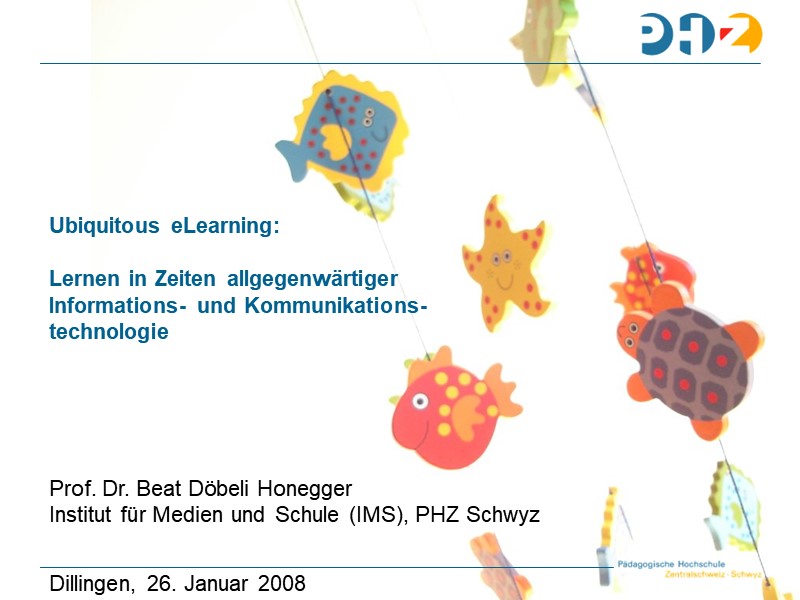
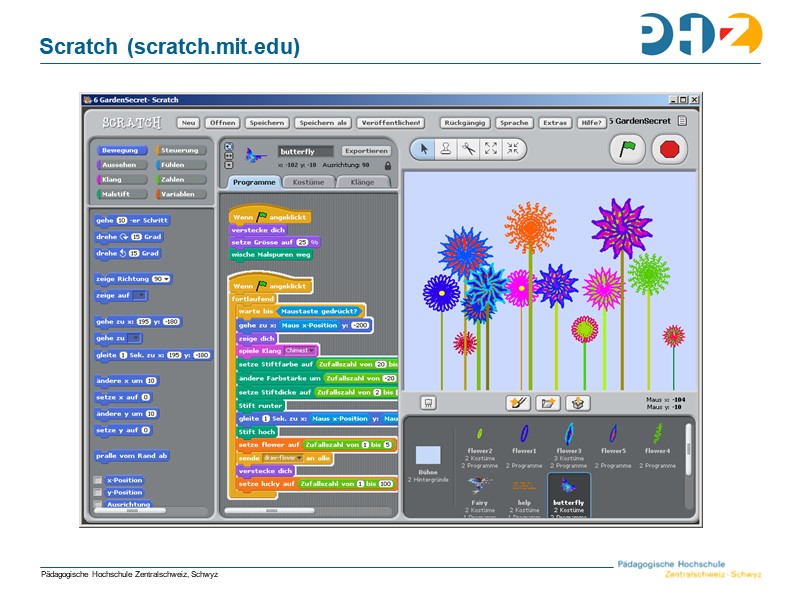
- ICT im Hosensack - Informatik im Kopf?
Gedanken zu ICT und Informatik in der Schweizer Primarschule
Symposium "25 Jahre Schulinformatik" im Stift Melk, 29.09.2010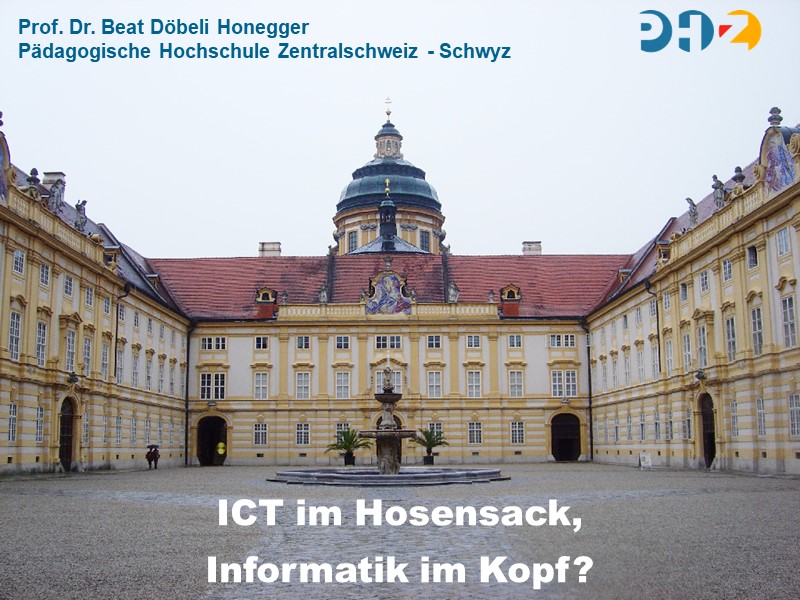
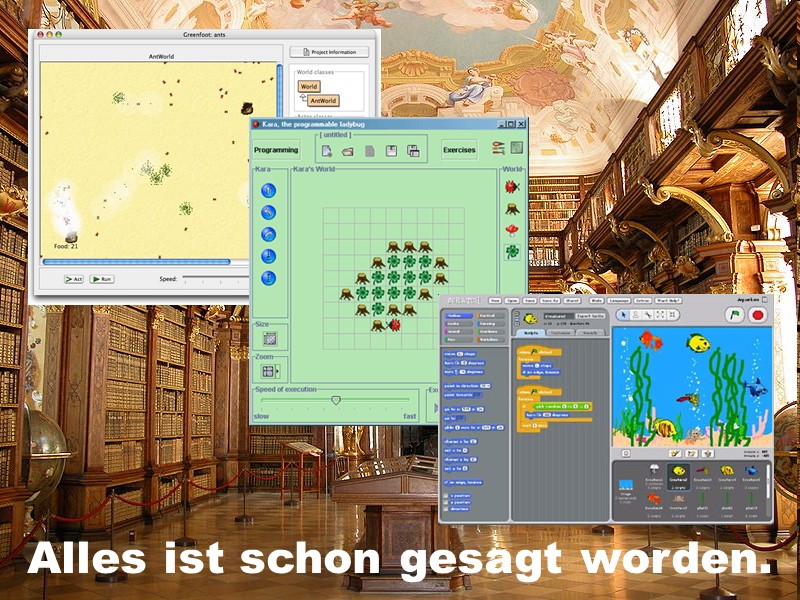
- Informatik konkret machen
Ideen zum Informatikunterricht in der Volksschule
Fachbereich Medienbildung, PH Zürich, 03.10.2013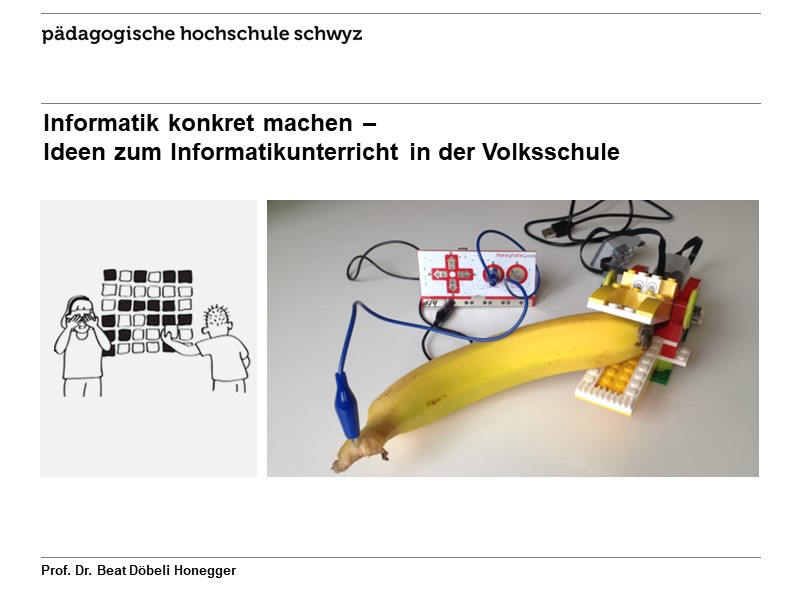
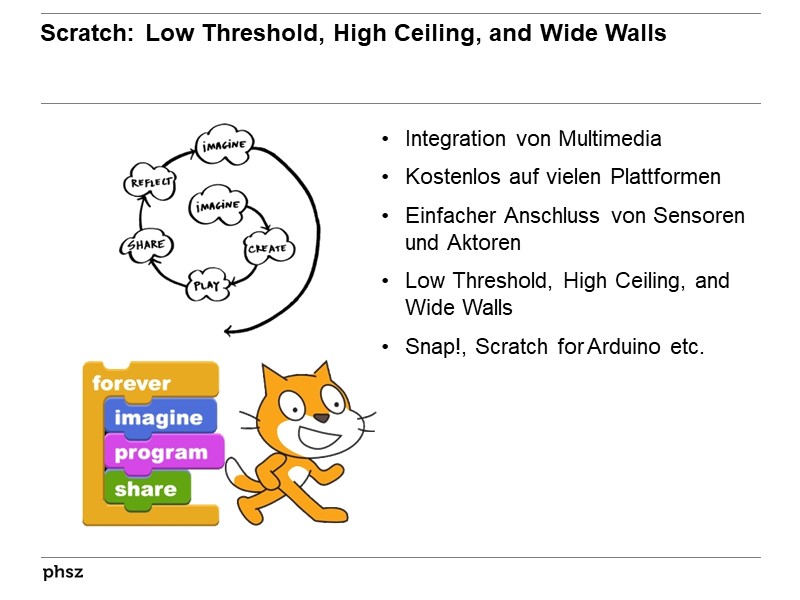
- i-factory teacher workshop
6x jährlich durchgeführter Workshop - Version 2014 des Vortrags
Verkehrshaus der Schweiz, Luzern, 04.06.2014
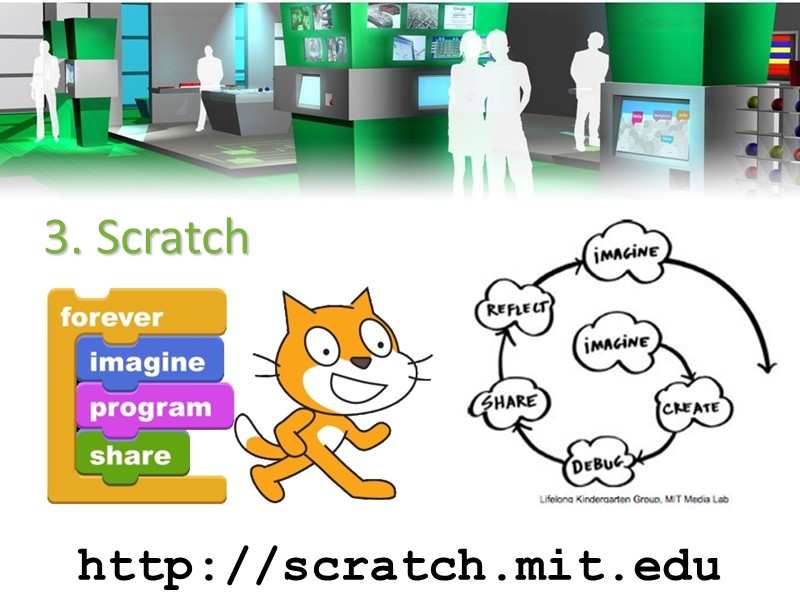
- We are all excited - but why?
Opening Keynote (Video of the keynote together with Mitch Resnick)
Scratch Conference, Amsterdam, 13.08.2015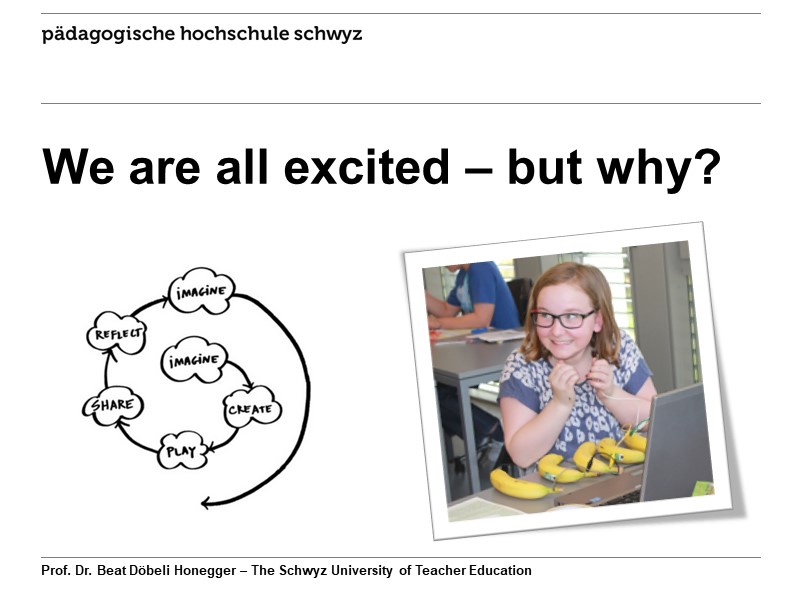
11 Einträge in Beats Blog
- Programm der Scratch-Konferenz Amsterdam 2015 erschienen (Juli 2015)
- aKey MaKey - Bananen & Co. als Tastatur (Mai 2013)
- Scratch mit Bewegungen steuern (Januar 2013)
- Scratch: (K)eine geeignete Programmiersprache für die Allgemeinbildung? (September 2011)
- In Entwicklung: Scratch 2.0 mit Flash und Prozeduren (März 2011)
- Scratch-Ableger und Erweiterungen (November 2009)
- Digital Natives können Lesen, aber nicht Schreiben (November 2009)
- Scratch Version 1.3 erschienen (September 2008)
- Scratch-Board (August 2007)
- Scratch-Virus (August 2007)
- Kinderleicht programmieren mit Scratch (Juni 2007)
 Zeitleiste
 252 Erwähnungen
- Learnable Programming - Blocks and Beyond (David Bau, Jeff Gray, Caitlin Kelleher, Josh Sheldon, Franklyn A. Turbak)


- Comparing loops misconceptions in block-based and text-based programming languages at the K-12 level (Monika Mladenović, Ivica Boljat, Žana Žanko)
- Programming Multimedia Stories in Scratch to Integrate Computational Thinking and Writing with Elementary Students (Shaunna Smith, Lauren E. Burrow)
- Neural Network Construction Practices in Elementary School (Gilad Shamir, Ilya Levin)
- Scratch Programming for Teens (Jerry Lee Ford)
- Make Code Play - A Project Guide to Game Design Beyond the Screen (Veena Vasudevan, Yasmin B. Kafai, Sari Widman)
- Codierte Kunst - Kunst Programmieren mit Snap! (Joachim Wedekind)
- A Networked, Media-Rich Programming Environment to Enhance Technological Fluency at After-School Centers in Economically-Disadvantaged Communities - Proposal to the National Science Foundation (Mitchel Resnick, Yasmin B. Kafai, John Maeda) (2003)
- Scratch - A Sneak Preview (John Maloney, Leo Burd, Yasmin B. Kafai, Natalie Rusk, Brian Silverman, Mitchel Resnick) (2004)
- Creative Coding - Programming for Personal Expression (Kylie A. Peppler, Yasmin B. Kafai) (2005)
- Tools for Creating Custom Physical Computer Interfaces (Amon Millner, Mitchel Resnick) (2005)
- All I Really Need to Know (About Creative Thinking) I Learned (By Studying How Children Learn) in Kindergarten (Mitchel Resnick) (2007)
- ScratchR - a platform for sharing user-generated programmable media (Andrés Monroy-Hernández) (2007)
- Designing Tangible Programming Languages for Classroom Use (Michael S. Horn, Robert J.K. Jacob) (2007)
- Sowing the seeds for a more creative society (Mitchel Resnick) (2007)
- Puck - A Visual Programming System for Schools (Lutz Kohl) (2008)
- Empowering kids to create and share programmable media (Andrés Monroy-Hernández, Mitchel Resnick) (2008)
- Interesse wecken und Grundkenntnisse vermitteln - 3. Münsteraner Workshop zur Schulinformatik - 7. Mai 2008 (Marco Thomas, Michael Weigend) (2008)
- Informatik und Verkehr - Modellieren mit Scratch (Michael Weigend)
- Informatik und Verkehr - Modellieren mit Scratch (Michael Weigend)
- «Scratchen» mit Bits und Bytes (Adrian Albisser) (2008)
- Informatik für Alle - Wie viel Programmierung braucht der Mensch? (Kerstin Strecker) (2009)
- Entwicklung und Bewertung einer Unterrichtssequenz zum Thema Algorithmen im Informatikunterricht der 7. Jahrgangsstufe mit Hilfe der Programmierumgebung Scratch - Schriftliche Hausarbeit für das Lehramt an Gymnasien in Bayern (Susanne Hoika) (2009)
- Children's Participation Patterns in Online Communities - An Analysis of Israeli Learners in the Scratch Online Community (Oren Zuckerman, Ina Blau, Andrés Monroy-Hernández) (2009)
- Ein Laptop für jedes Kind (OLPC) - Login Nr. 156 (2009)
- Sprechende Katze und Zeichenschildkröte - Eerste Schritte im visuellen Programmieren mit Turtle Art und Scratch (Rüdeger Baumann)
- Programmierunterricht in welcher Programmiersprache? - Eine Streitfrage (Herbert Bruderer)
- Sprechende Katze und Zeichenschildkröte - Eerste Schritte im visuellen Programmieren mit Turtle Art und Scratch (Rüdeger Baumann)
- Children, Computer and Creativity - Usability Guidelines for Designing a Game Authoring Tool for Children (Maizatul Hayati Binti Mohamad Yatim) (2009)
- INFOS 2009 - 13. GI-Fachtagung Informatik und Schule (21. - 24. September 2009 in Berlin) (Bernhard Koerber) (2009)
- Mit iLearnIT.ch spielerisch das Interesse an Informatik wecken (Beat Döbeli Honegger, André Frey, Philippe Braxmeier)
- Mit iLearnIT.ch spielerisch das Interesse an Informatik wecken (Beat Döbeli Honegger, André Frey, Philippe Braxmeier)
- SIGCSE 2010 - Proceedings of the 41st ACM technical symposium on Computer science education, SIGCSE 2010, Milwaukee, Wisconsin, USA, March 10-13, 2010 (Gary Lewandowski, Steven A. Wolfman, Thomas J. Cortina, Ellen Lowenfeld Walker) (2009)
- Braided Teaching in Secondary CS Education - Contexts, Continuity, and the Role of Programming (Arno Pasternak, Jan Vahrenhold) (2010)
- How programming environment shapes perception, learning and goals - logo vs. Scratch (Colleen M. Lewis) (2010)
- Braided Teaching in Secondary CS Education - Contexts, Continuity, and the Role of Programming (Arno Pasternak, Jan Vahrenhold) (2010)
- A Tale of Two Online Communities - Fostering Collaboration and Creativity in Scientists and Children (Cecilia R. Aragon, Sarah S. Poon, Andrés Monroy-Hernández, Diana Aragon) (2009)
- Scratch: Programming for All - "Digital fluency" should mean designing, creating, and remixing, not just browsing, chatting, and interacting. (Mitchel Resnick, John Maloney, Andrés Monroy-Hernández, Natalie Rusk, Evelyn Eastmond, Karen Brennan, Amon Millner, Eric Rosenbaum, Jay Silver, Brian Silverman, Yasmin B. Kafai) (2009)
- Scalable game design and the development of a checklist for getting computational thinking into public schools (Alexander Repenning, David Webb, Andri Ioannidou) (2010)
- Scratch me if you can! - Ein Ideenbuch (Frank Engeln) (2010)
- Didaktik der Informatik - Möglichkeiten empirischer Forschungsmethoden und Perspektiven der Fachdidaktik - 6. Workshop der GI-Fachgruppe DDI (Ira Diethelm, Christina Dörge, Claudia Hildebrandt, Carsten Schulte) (2010)
- Scratch2Greenfoot - Eine kreative Einführung in die Programmierung mit Scratch und Greenfoot (Ralf Romeike) (2010)
- Scratch2Greenfoot - Eine kreative Einführung in die Programmierung mit Scratch und Greenfoot (Ralf Romeike) (2010)
- 25 Jahre Schulinformatik - Zukunft mit Herkunft (Gerhard Brandhofer, Gerald Futschek, Peter Micheuz, Anton Reiter, Karl Schoder) (2010)
- The Secret of Programming Education - Creating Motivation (Michael Kölling)
- ICT im Hosensack - Informatik im Kopf? - Gedanken über ICT und Informatik in der Schweizer Primarschule (Beat Döbeli Honegger) (2010)
- The Secret of Programming Education - Creating Motivation (Michael Kölling)
- ICER 2010 - Proceedings of the Sixth International Workshop on Computing Education Research, Aarhus, Denmark, August 9-10, 2010 (Michael E. Caspersen, Michael J. Clancy, Kate Sanders) (2010)
- Learning computer science concepts with scratch (Orni Meerbaum-Salant, Michal Armoni, Mordechai Ben-Ari) (2010)
- Learning computer science concepts with scratch (Orni Meerbaum-Salant, Michal Armoni, Mordechai Ben-Ari) (2010)
- A New Culture of Learning - Cultivating the Imagination for a World of Constant Change (Douglas Thomas, J. S. Brown) (2011)

- Computer Science Education 2/2011 (2011)
- Report of a Workshop of Pedagogical Aspects of Computational Thinking (2011)
- Programmieren lernen - Spielerischer Einstieg in die Software-Entwicklung (Oliver Lau) (2011)
- Informatik macht Schule - Bemühungen zur Förderung des Informatikunterrichts (Herbert Bruderer) (2011)
- Programmierunterricht in welcher Programmiersprache? - Eine Streitfrage
- Programmierunterricht in welcher Programmiersprache? - Eine Streitfrage
- Computational Thinking Patterns (Andri Ioannidou, Vicki E. Bennett, Alexander Repenning, Kyu Han Koh, Ashok R. Basawapatna) (2011)
- Lernen in der Netzwerkgesellschaft (Armin Medosch) (2011)
- ITiCSE 2011 - Proceedings of the 16th Annual SIGCSE Conference on Innovation and Technology in Computer Science Education, ITiCSE 2011, Darmstadt, Germany, June 27-29, 2011 (Guido Rößling, Thomas L. Naps, Christian Spannagel) (2011)
- Habits of programming in scratch (Orni Meerbaum-Salant, Michal Armoni, Mordechai Ben-Ari) (2011)
- Habits of programming in scratch (Orni Meerbaum-Salant, Michal Armoni, Mordechai Ben-Ari) (2011)
- LOG IN 168/2011 - Forschendes und entdeckendes Lernen im Informatikunterricht (2011)
- Wozu JAVA? - Plädoyer für grafisches Programmieren (Eckart Modrow, Jens Mönig, Kerstin Strecker) (2011)
- Wozu JAVA? - Plädoyer für grafisches Programmieren (Eckart Modrow, Jens Mönig, Kerstin Strecker) (2011)
- Informatik in Bildung und Beruf - INFOS 2011 - 14. GI-Fachtagung Informatik und Schule (Marco Thomas) (2011)
- Informatiktools - Gestaltung einer Plattform für Werkzeuge für den Informatikunterricht (Ralf Romeike) (2011)
- Visuelle Programmierung - oder: Was lernt man aus Syntaxfehlern? (Eckart Modrow) (2011)
- Zur Didaktik der Algorithmik (Kerstin Strecker) (2011)
- Informatiktools - Gestaltung einer Plattform für Werkzeuge für den Informatikunterricht (Ralf Romeike) (2011)
- Super Scratch Programming Adventure (LEAD Project) (2012)
- Reviving Papert’s Dream (Mitchel Resnick) (2012)
- Schulblatt Aargau und Solothurn 16/12 (2012)
- Besuch im Hirn eines Computers (Beate Kuhnt) (2012)
- Besuch im Hirn eines Computers (Beate Kuhnt) (2012)
- Mobile Learning: Einsatz mobiler Endgeräte im Lernen, Wissenserwerb sowie der Lehr-/Lernorganisation - 2. Workshop im Rahmen der DeLFI 2012 (Mostafa Akbari, Doreen Böhnstedt, Claudia Bremer, Mohamed Amine Chatti, Christoph Rensing) (2012)
- ScratchTab - Eine Tablet-basierte Anwendung zum Erlernen von Programmierkonzepten (Philipp Brauner, Hendrik Thüs, Martina Ziefle, Ulrik Schroeder)
- ICER 2012 - International Computing Education Research Conference, ICER '12, Auckland, New Zealand, September 10-12, 2012 (Alison Clear, Kate Sanders, Beth Simon) (2012)
- The importance of students' attention to program state - a case study of debugging behavior (Colleen M. Lewis) (2012)
- The importance of students' attention to program state - a case study of debugging behavior (Colleen M. Lewis) (2012)
- SIGCSE 2012 - Proceedings of the 43rd ACM technical symposium on Computer science education, SIGCSE 2012, Raleigh, NC, USA, February 29 - March 3, 2012 (Laurie A. Smith King, David R. Musicant, Tracy Camp, Paul T. Tymann) (2012)
- What do students learn about programming from game, music video, and storytelling projects? (Joel C. Adams, Andrew R. Webster) (2012)
- What do students learn about programming from game, music video, and storytelling projects? (Joel C. Adams, Andrew R. Webster) (2012)
- Digital gefordert - NZZ am Sonntag (2012)
- Starting from Scratch - An Introduction to Computing Science - Learner Notes (Jeremy Scott) (2012)
- Computer Science Education 3/2013 (2013)
- Learning computer science concepts with Scratch (Orni Meerbaum-Salant, Michal Armoni, Mordechai Ben-Ari) (2013)
- Learning computer science concepts with Scratch (Orni Meerbaum-Salant, Michal Armoni, Mordechai Ben-Ari) (2013)
- Programmieren mit Scratch - Objekte, Methoden, Variablen und Kontrollstrukturen (Jürgen Ullwer) (2013)
- Computer Science Concepts in Scratch (Michal Armoni, Mordechai Ben-Ari) (2013)
- 1. First Steps
- 4. Communications Between Sprites
- 1. First Steps
- Invent to Learn - Making, Tinkering, and Engineering in the Classroom (Sylvia Libow Martinez, Gary Stager) (2013)
- Der Spiegel 20/2013 (2013)
- Mathe, Bio, Programmieren (2013)
- Mathe, Bio, Programmieren (2013)
- Learning to Code Isn't Enough - A learning scientist's attempt to temper the "learn to code" mania with a healthy dollop of reality (Shuchi Grover) (2013)
- SIGCSE 2013 - The 44th ACM Technical Symposium on Computer Science Education, SIGCSE '13, Denver, CO, USA, March 6-9, 2013 (Tracy Camp, Paul T. Tymann, J. D. Dougherty, Kris Nagel) (2013)
- The social turn in K-12 programming - Moving from computational thinking to computational participation (Yasmin B. Kafai, Leo Leppänen, Quinn Burke, Juho Leinonen, Arto Hellas) (2013)
- Einführung in die Mediendidaktik - Lehren und Lernen mit digitalen Medien (Dominik Petko) (2014)
- Research on e-Learning and ICT in Education - Technological, Pedagogical and Instructional Perspectives (Charalampos Karagiannidis, Panagiotis Politis, Ilias Karasavvidis) (2014)
- 6. Teaching Informatics in Primary School With and Without Educational Software Support (Panagiota Halki, Panagiotis Politis) (2014)
- 6. Teaching Informatics in Primary School With and Without Educational Software Support (Panagiota Halki, Panagiotis Politis) (2014)
- A Practical Guide to Teaching Computing and ICT in the Secondary School - 2. Edition (Andrew Connell, Anthony Edwards, Alison Hramiak) (2014)
- Scratch 2.0 - spielend programmieren lernen (Jürgen Ullwer) (2014)
- Learn to Program with Scratch - A Visual Introduction to Programming with Art, Science, Math and Games (Majed Marji) (2014)
- Erziehung zur digitalen Mündigkeit (Pavel Lokshin) (2014)
- Help Your Kids with Computer Coding (DK Publishing) (2014)
- c't 14/2014 (2014)
- Computer be-greifen! - Informatik-Unterricht ab der Grundschule (Beat Döbeli Honegger, Jöran Muuß-Merholz) (2014)
- Computer be-greifen! - Informatik-Unterricht ab der Grundschule (Beat Döbeli Honegger, Jöran Muuß-Merholz) (2014)
- Connected Code - Why Children Need to Learn Programming (Yasmin B. Kafai, Quinn Burke) (2014)
- Programmieren statt Frühfranzösisch (Matthias Schüssler) (2014)
- DeLFI 2014 (Stephan Trahasch, Rolf Plötzner, Gerhard Schneider, Claudia Gayer, Daniel Sassiat, Nicole Wöhrle) (2014)
- ScratchDrone - Systematische Programmierung von Flugdrohnen für den Informatikunterricht (Raphael Zender, Julius Höfler, Patrick Wolfien, Ulrike Lucke) (2014)
- ScratchDrone - Systematische Programmierung von Flugdrohnen für den Informatikunterricht (Raphael Zender, Julius Höfler, Patrick Wolfien, Ulrike Lucke) (2014)
- ISSEP 2014 - Informatics in Schools - Teaching and Learning Perspectives (Yasemin Gülbahar, Erinç Karataş) (2014)
- 2. The Many Facets of Scratch (G. Barbara Demo, Lawrence Williams) (2014)
- 2. The Many Facets of Scratch (G. Barbara Demo, Lawrence Williams) (2014)
- Creative Computing (Karen Brennan, Christan Balch, Michelle Chung) (2014)
- WiPSCE 2014 - Proceedings of the 9th Workshop in Primary and Secondary Computing Education, Berlin, Germany, November 5-7, 2014 (Carsten Schulte, Michael E. Caspersen, Judith Gal-Ezer) (2014)
- Should your 8-year-old learn coding? (Caitlin Duncan, Tim Bell, Steve Tanimoto) (2014)
- Scratch vs. Karel - impact on learning outcomes and motivation (Alexander Ruf, Andreas Mühling, Peter Hubwieser) (2014)
- Programming in the wild - trends in youth computational participation in the online scratch community (Deborah A. Fields, Michael Giang, Yasmin B. Kafai) (2014)
- Should your 8-year-old learn coding? (Caitlin Duncan, Tim Bell, Steve Tanimoto) (2014)
- Raspberry Pi für Kids (Michael Weigend) (2015)
- Spiele programmieren supereasy (2015)
- Code-It: How to Teach Primary Programming Using Scratch (Phil Bagge) (2015)
- Programmieren supereasy - Einfacher Einstieg in SCRATCH und PYTHON (Carol Vorderman) (2015)
- Scratch im Geometrieunterricht (Klaus-Tycho Förster) (2015)
- Adventures in Raspberry Pi (Carrie Anne Philbin) (2015)
- Minding the gap between blocks-based and text-based programming (David Weintrop) (2015)
- SIGCSE 2015 - Kansas City, MO, USA, March 4-7, 2015 (Adrienne Decker, Kurt Eiselt, Carl Alphonce, Jodi Tims) (2015)
- Scratch - A Way to Logo and Python (Mark Dorling, Dave White) (2015)
- Scratch - A Way to Logo and Python (Mark Dorling, Dave White) (2015)
- Faszinierende Elektronik-Projekte mit Scratch, Arduino & Raspberry Pi (Erik Bartmann) (2015)
- Informatik konkret: 28 Anwendungsbeispiele (Kerstin Strecker) (2015)
- Scratch For Kids For Dummies (Derek Breen) (2015)
- Teaching with Tablets (Helen Caldwell, James Bird) (2015)
- 9. Creating your own apps (Clare Fenwick)
- Der kleine Hacker: Programmieren für Einsteiger - Mit Scratch schnell und effektiv programmieren lernen (Christian Immler) (2015)
- Proceedings of the Workshop in Primary and Secondary Computing Education, WiPSCE 2015, London, United Kingdom, November 9-11, 2015 (Judith Gal-Ezer, Sue Sentance, Jan Vahrenhold) (2015)
- Constructionist Gaming Beyond the Screen - Middle School Students' Crafting and Computing of Touchpads, Board Games, and Controllers (Yasmin B. Kafai, Veena Vasudevan) (2015)
- Frame-Based Editing - Easing the Transition from Blocks to Text-Based Programming (Michael Kölling, Neil C. C. Brown, Amjad AlTadmri) (2015)
- Dr. Scratch - a Web Tool to Automatically Evaluate Scratch Projects (Jesús Moreno-León, Gregorio Robles) (2015)
- Teaching Computer Science to 5-7 year-olds - An initial study with Scratch, Cubelets and unplugged computing (Benjamin Wohl, Barry Porter, Sarah Clinch) (2015)
- Constructionist Gaming Beyond the Screen - Middle School Students' Crafting and Computing of Touchpads, Board Games, and Controllers (Yasmin B. Kafai, Veena Vasudevan) (2015)
- Informatik allgemeinbildend begreifen - INFOS 2015 (Jens Gallenbacher) (2015)
- ISSEP 2015 - Informatics in Schools. Curricula, Competences, and Competitions (Andrej Brodnik, Jan Vahrenhold) (2015)
- 8. Programming in Scratch Using Inquiry-Based Approach (Jiří Vaníček)
- 8. Programming in Scratch Using Inquiry-Based Approach (Jiří Vaníček)
- ICER 2015 - Proceedings of the eleventh annual International Conference on International Computing Education Research, ICER 2015, Omaha, NE, USA, August 09 - 13, (Brian Dorn, Judy Sheard, Quintin I. Cutts) (2015)
- Using Commutative Assessments to Compare Conceptual Understanding in Blocks-based and Text-based Programs (David Weintrop, Uri Wilensky) (2015)
- Fourth Grade Students Reading Block-Based Programs - Predictions, Visual Cues, and Affordances (Hilary A. Dwyer, Charlotte Hill, Alexandria K. Hansen, Ashley Iveland, Diana Franklin, Danielle Harlow) (2015)
- Using Commutative Assessments to Compare Conceptual Understanding in Blocks-based and Text-based Programs (David Weintrop, Uri Wilensky) (2015)
- Pflichtfach Informatik - Bildungsexperten fordern verpflichtenden Unterricht an allgemeinbildenden Schulen (Beate Barrein, Dorothee Wiegand) (2015)
- Perceptions of non-CS majors in intro programming - The rise of the conversational programmer (Parmit K. Chilana, Celena Alcock, Shruti Dembla, Anson Ho, Ada Hurst, Brett Armstrong, Philip J. Guo) (2015)
- Wie man Lehrer fernsteuert (Manfred Dworschak) (2015)
- Visuelles Programmieren - LOG IN 181/182 (2015)
- Haben Sie noch ELAN? (Bernhard Koerber)
- Schildkrötengrafik zeitgemäß - Mit dreidimensionaler Turtle-Grafik genetisch zur objektorientierten Programmierung (Reinhard Oldenburg, Magnus Rabel, Jan Schuster)
- Haben Sie noch ELAN? (Bernhard Koerber)
- Learner-Centered Design of Computing Education - Research on Computing for Everyone (Mark Guzdial) (2015)
- Computational Participation - Understanding Coding as an Extension of Literacy Instruction (Quinn Burke, W. Ian O’Byrne, Yasmin B. Kafai) (2016)
- Making-Aktivitäten mit Kindern und Jugendlichen - Handbuch zum kreativen digitalen Gestalten (Sandra Schön, Martin Ebner, Kristin Narr) (2016)
- Adventures in Coding (Eva Holland, Chris Minnick) (2016)
- SIGCSE 2016 - Memphis, TN, USA, March 02 - 05, 2016 (Carl Alphonce, Jodi Tims, Michael E. Caspersen, Stephen H. Edwards) (2016)
- Multi-Track Programming Competitions with Scratch (Jason Arnold, Heather Bort, Ryan Naugle, Casey O'Hare, Dennis Brylow) (2016)
- Multi-Track Programming Competitions with Scratch (Jason Arnold, Heather Bort, Ryan Naugle, Casey O'Hare, Dennis Brylow) (2016)
- Klötzchen-Kommando - Roboter bauen und steuern mit Lego WeDo 2.0 (Thomas Feibel) (2016)
- Das ist kein Spiel (Jochen Bettzieche) (2016)
- Didaktik der Informatik (Eckart Modrow, Kerstin Strecker) (2016)
- Programmieren mit Scratch - Vom Baustein zum persönlichen Game (Rita Lusser, Andrea Schmid, Doris Reck) (2016)
- Learn to Code with Scratch - on your Raspberry Pi (2016)
- Spielend programmieren lernen - mit Scratch, Logo, Python, HTML und JavaScript (Max Wainerwright) (2016)
- Modality matters - Understanding the Effects of Programming Language Representation in High School Computer Science Classrooms (David Weintrop) (2016)
- Scratch by Example - Programming for All Ages (Eduardo A. Vlieg) (2016)
- ICER 2016 - Proceedings of the 2016 ACM Conference on International Computing Education Research, ICER 2016, Melbourne, VIC, Australia, September 8-12, 2016 (Judy Sheard, Josh Tenenberg, Donald Chinn, Brian Dorn) (2016)
- Mixed Methods for the Assessment and Incorporation of Computational Thinking in K-12 and Higher Education (Joshua Levi Weese) (2016)
- Mixed Methods for the Assessment and Incorporation of Computational Thinking in K-12 and Higher Education (Joshua Levi Weese) (2016)
- Scratch Programming Playground (Al Sweigart) (2016)
- Proceedings of the 11th Workshop in Primary and Secondary Computing Education (WiPSCE 2016) - Münster, Germany, October 13-15, 2016 (Jan Vahrenhold, Erik Barendsen) (2016)
- From Scratch to Patch - Easing the Blocks-Text Transition (William Robinson) (2016)
- From Scratch to Patch - Easing the Blocks-Text Transition (William Robinson) (2016)
- Emerging Research, Practice, and Policy on Computational Thinking (Peter J. Rich, Charles B. Hodges) (2017)
- 12. Teacher Transformations in Developing Computational Thinking - Gaming and Robotics Use in After-School Settings (Alan Buss, Ruben Gamboa)
- 17. Assessing Algorithmic and Computational Thinking in K-12 - Lessons from a Middle School Classroom (Shuchi Grover) (2017)
- 19. Exploring Strengths and Weaknesses in Middle School Students´ Computational Thinking in Scratch (Kevin Lawanto, Kevin Close, Clarence Ames, Sarah Brasiel)
- 24. Computational Participation - Teaching Kids to Create and Connect Through Code (Yasmin B. Kafai, Quinn Burke) (2017)
- 12. Teacher Transformations in Developing Computational Thinking - Gaming and Robotics Use in After-School Settings (Alan Buss, Ruben Gamboa)
- Coding Literacy - How Computer Programming Is Changing Writing (Annette Vee) (2017)
- Fostering Creativity through Computing (Aman Yadav, Steve Cooper) (2017)
- SIGCSE 2017 - Proceedings of the 2017 ACM SIGCSE Technical Symposium on Computer Science Education, Seattle, WA, USA, March 8-11, 2017 (Michael E. Caspersen, Stephen H. Edwards, Tiffany Barnes, Daniel D. Garcia) (2017)
- Writing Autograders for Snap! And Integrating them Into Your Course (Abstract Only) (Michael Ball) (2017)
- Ganz easy programmieren lernen: Scratch (Jonathan Melmoth, Rosie Dickins, Louie Stowell) (2017)
- Eingebettete Systeme - LOG IN 185/186 (2017)
- Physical Computing - Unterrichtsprojekte mit dem Raspberry Pi (Tobias Hübner) (2017)
- Physical Computing - Unterrichtsprojekte mit dem Raspberry Pi (Tobias Hübner) (2017)
- Maker Education (Stefan Aufenanger, Jasmin Bastian, Kathrin Mertes) (2017)
- Vom Doing zum Learning - Maker Education in der Schule
- Vom Doing zum Learning - Maker Education in der Schule
- Keine Raketenwissenschaft - Mit ScratchJr kurze Animationen zusammenklicken (2017)
- Analysis of Scratch Projects of an Introductory Programming Course for Primary School Students (Alexandra Funke, Katharina Geldreich, Peter Hubwieser) (2017)
- Hello World 2 (2017)
- ZLV Magazin Juni 2017 - Das neue Fach Medien und Informatik (2017)
- Spannende und intensive Weiterbildung (Roland Schaller) (2017)
- Spannende und intensive Weiterbildung (Roland Schaller) (2017)
- Zehn Jahre Elementarinformatik – Elementare Informatikkompetenzen als Basis für nicht-konsumierenden und reflektierten Umgang mit Computer-Medien in der Vor- und Grundschule, 2008-2017 - Werkstattberichte zur Elementarinformatik, Band 1 (Ute Schmid, Anja Gärtig-Daugs) (2017)
- Wegleitung «Medien und Informatik» für Lehrpersonen der Primarstufe (5./6. Klasse) (Iwan Schrackmann, Morena Borelli, Urs Frischherz, Michael Hielscher) (2017)
- Scratch Projektideen (Michael Hielscher, Beat Döbeli Honegger) (2017)
- Scratch Gruppenpuzzle (Michael Hielscher, Beat Döbeli Honegger) (2017)
- Programmierkonzepte in Scratch (Dorit Assaf) (2017)
- Lifelong Kindergarten - Cultivating Creativity through Projects, Passion, Peers, and Play (Mitchel Resnick) (2017)
- 1. Creative Learning
- 2. Projects
- 3. Passion
- 1. Creative Learning
- Nutze die Macht der Algorithmen - Algorithmen Z2 (Urs Meier, Michel Hauswirth) (2017)
- Coding - Computer + Unterricht Nr. 107/2017 (Stefan Aufenanger) (2017)
- 21st Century Skills
- Heiße Drähte in die Zukunft (Christian Kleinhanß)
- Im Programmierfieber (Janina Bistron)
- 21st Century Skills
- Hello World 3 (2017)
- Informatische Bildung zum Verstehen und Gestalten der digitalen Welt - 17. GI-Fachtagung Informatik und Schule (Ira Diethelm) (2017)
- Zieldimensionen für frühe informatische Bildung im Kindergarten und in der Grundschule (Nadine Bergner, Hilde Köster, Johannes Magenheim, Kathrin Müller, Ralf Romeike, Ulrik Schroeder, Carsten Schulte)
- 3D-Druck als Motivation für die Einführung in die Programmierung in der Realschule (Oliver Krisch, Petra Kastl, Ralf Romeike)
- Herausforderung durch neue Programmierkonzepte in blockbasierten Programmiersprachen (Sven Jatzlau, Ralf Romeike)
- Zieldimensionen für frühe informatische Bildung im Kindergarten und in der Grundschule (Nadine Bergner, Hilde Köster, Johannes Magenheim, Kathrin Müller, Ralf Romeike, Ulrik Schroeder, Carsten Schulte)
- Lernen und Lehren mit Technologien: Vermittlung digitaler und informatischer Kompetenzen - Erziehung & Unterricht 7&8/2017 (2017)
- Informatische Bildung mithilfe eines MOOC (Stefan Janisch, Martin Ebner, Wolfgang Slany)
- Coding und Robotik im Unterricht (Gerhard Brandhofer) (2017)
- Informatische Bildung mithilfe eines MOOC (Stefan Janisch, Martin Ebner, Wolfgang Slany)
- Proceedings of the 12th Workshop on Primary and Secondary Computing Education, WiPSCE 2017, Nijmegen, The Netherlands, November 8-10, 2017 (Erik Barendsen, Peter Hubwieser) (2017)
- Informatics in Schools: Focus on Learning Programming - 10th International Conference on Informatics in Schools: Situation, Evolution, and Perspectives, ISSEP 2017, Helsinki, Finland, November 13-15, 2017 (Valentina Dagiene, Arto Hellas) (2017)
- Empowering learners with tools in CS education - Physical computing in secondary schools (Mareen Grillenberger, Ralf Romeike) (2018)
- SIGCSE 2018 - Proceedings of the 49th ACM Technical Symposium on Computer Science Education, SIGCSE 2018, Baltimore, MD, USA, February 21-24, 2018 (Tiffany Barnes, Daniel D. Garcia, Elizabeth K. Hawthorne, Manuel A. Pérez-Quiñones) (2018)
- Getting Unstuck - New Resources for Teaching Debugging Strategies in Scratch (Abstract Only) (Paulina Haduong, Karen Brennan) (2018)
- Hello World 4 (2018)
- Programming Paradigms and Beyond (Shriram Krishnamurthi, Kathi Fisler) (2018)
- ICLS 2018 1/3 (2018)
- Blocks or Text? - How Programming Language Modality Makes a Difference in Assessing Underrepresented Populations (David Weintrop, Heather Killen, Baker Franke)
- Blocks or Text? - How Programming Language Modality Makes a Difference in Assessing Underrepresented Populations (David Weintrop, Heather Killen, Baker Franke)
- phsz fokus 2017 (Pädagogische Hochschule Schwyz (PHSZ)) (2018)
- Hello World 5/2018 - The Magazine for Computing & Digital Making Educators (2018)
- ICER 2018 - Proceedings of the 2018 ACM Conference on International Computing Education Research, ICER 2018, Espoo, Finland, August 13-15, 2018 (Lauri Malmi, Ari Korhonen, Robert McCartney, Andrew Petersen) (2018)
- A Study on the Assessment of Introductory Computational Thinking via Scratch Programming in Primary Schools (Janne Fagerlund) (2018)
- Starting from Scratch - Outcomes of Early Computer Science Learning Experiences and Implications for What Comes Next (David Weintrop, Alexandria K. Hansen, Danielle B. Harlow, Diana Franklin) (2018)
- Programming Misconceptions for School Students (Alaaeddin Swidan, Felienne Hermans, Marileen Smit) (2018)
- A Study on the Assessment of Introductory Computational Thinking via Scratch Programming in Primary Schools (Janne Fagerlund) (2018)
- Constructionism 2018 - August 20-25, Vilnius, Lithunia (Valentina Dagiene, Eglė Jasute) (2018)
- Hello World 6 (2018)
- Login 189/190 (2018)
- Informatische Kompetenzen in der Grundschule - Sichtweisen und Bausteine (Marco Thomas)
- Informatische Kompetenzen in der Grundschule - Sichtweisen und Bausteine (Marco Thomas)
- Proceedings of the 13th Workshop in Primary and Secondary Computing Education, WiPSCE 2018, Potsdam, Germany, October 04-06, 2018. (Andreas Mühling, Quintin I. Cutts) (2018)
- Thinking out of the box - comparing metaphors for variables in programming education (Felienne Hermans, Alaaeddin Swidan, Efthimia Aivaloglou, Marileen Smit) (2018)
- Thinking out of the box - comparing metaphors for variables in programming education (Felienne Hermans, Alaaeddin Swidan, Efthimia Aivaloglou, Marileen Smit) (2018)
- Informatics in Schools: Fundamentals of Computer Science and Software Engineering (Sergei Pozdniakov, Valentina Dagienė) (2018)
- Frühe informatische Bildung - Ziele und Gelingensbedingungen für den Elementar- und Primarbereich - Wissenschaftliche Untersuchungen zur Arbeit der Stiftung "Haus der kleinen Forscher" (Nadine Bergner, Hilde Köster, Johannes Magenheim, Kathrin Müller, Ralf Romeike, Ulrik Schroeder, Carsten Schulte) (2018)
- Mit Code zum Ziel - Zwölf Angebote für den spielerischen Einstieg ins Programmieren (Jan Mahn, Anke Poimann) (2018)
- The effects of first programming language on college students’ computing attitude and achievement - a comparison of graphical and textual languages (Chen Chen, Paulina Haduong, Karen Brennan, Gerhard Sonnert, Philip Sadler) (2018)
- Einfach Informatik 5/6 - Programmieren (Begleitband) (Juraj Hromkovic) (2018)
- Coding for Kids in Scratch 3 - The Complete Guide to Creating Art, Artificial Intelligence, and Computer Games for Beginners (2018)
- Zum Interesse von Grundschulkindern an informatischen Lernmaterialien (Hilde Köster, Philipp Straube, Martin Brämer, Tobias Mehrtens, Volkhard Nordmeier, Julia Voigt) (2019)
- Informatik 2 - Internet und Algorithmen (Peter Brichzin, Ulrich Freiberger, Klaus Reinold, Albert Wiedemann) (2019)
- Hello World 7 (2019)
- Welcome to Scratch 3! (Miles Berry)
- Scratch 3.0 - Projects, Passion, Peers, and Play (Mitchel Resnick)
- Scratch meets micro:bit (Giles Booth)
- Learning Languages in Scratch (Miles Berry) (2019)
- Clever Cat Machine Learning in Scratch (David Horton) (2019)
- In Praise of Blocks (Miles Berry) (2019)
- Welcome to Scratch 3! (Miles Berry)
- «Why Do We Have to Learn This Baby Language?» (Brian Harvey) (2019)
- Concepts before coding - non-programming interactives to advance learning of introductory programming concepts in middle school (Shuchi Grover, Nicholas Jackiw, Patrik Lundh) (2019)
- Informatik auf der Sekundarstufe (1. Klasse) (Simone Meier, Urs Meyer, Lukas Dettwiler) (2019)
- Make Your Own Scratch Games! (Anna Anthropy) (2019)
- Block-based programming in computer science education (David Weintrop) (2019)
- Agile Schule - Methoden für den Projektunterricht in der Informatik und darüber hinaus (Peter Brichzin, Petra Kastl, Ralf Romeike) (2019)
- Mit Scratch 3 programmieren lernen (Erik Bartmann) (2019)
- Unterrichtseinheit Variablenkonzept auf der Sekundarstufe - Misskonzepte und deren Überwindung bei der Entwicklung des Variablenkonzepts auf der Sekundarstufe in Scratch (Christian Rauter) (2019)
- ICER 2019 - Proceedings of the 2019 ACM Conference on International Computing Education Research, ICER 2019, Toronto, ON, Canada, August 12-14, 2019 (Robert McCartney, Andrew Petersen, Anthony V. Robins, Adon Moskal) (2019)
- Identifying Learning Trajectories in Self-Directed Programming (Aaron Milgram, Shruti Jain, Michelle Ichinco) (2019)
- Reducing Caribbean's Students' «Code-Phobia» with Programming in Scratch (Camille Berry, Marlon Walcott) (2019)
- Identifying Learning Trajectories in Self-Directed Programming (Aaron Milgram, Shruti Jain, Michelle Ichinco) (2019)
- Informatik für alle - 18. GI-Fachtagung Informatik und Schule (Arno Pasternak) (2019)
- Aufgabe ist nicht gleich Aufgabe - Vielfältige Aufgabentypen bewusst in Scratch einsetzen (Katharina Geldreich, Mike Talbot, Peter Hubwieser)
- Aufgabe ist nicht gleich Aufgabe - Vielfältige Aufgabentypen bewusst in Scratch einsetzen (Katharina Geldreich, Mike Talbot, Peter Hubwieser)
- Hello World 10 - maths and computer science (2019)
- Proceedings of the 14th Workshop in Primary and Secondary Computing Education, WiPSCE 2019, Glasgow, Scotland, UK, October 23-25, 2019 (2019)
- Discriminating Programming Strategies in Scratch - Making the Difference between Novice and Experienced Programmers (Max Kesselbacher, Andreas Bollin) (2019)
- Using children's literature to introduce computing principles and concepts in primary schools - work in progress (Sarah Twigg, Lynne Blair, Emily Winter 0001) (2019)
- Cognitive Correlates of Computational Thinking - Evaluation of a Blended Unplugged/Plugged-In Course (Katerina Tsarava, Luzia Leifheit, Manuel Ninaus, Marcos Román-González, Martin V. Butz, Jessika Golle, Ulrich Trautwein, Korbinian Moeller) (2019)
- How to Transform Programming Processes in Scratch to Graphical Visualizations (Alexandra Simon, Katharina Geldreich, Peter Hubwieser) (2019)
- Programming to learn in Italian primary school (Martina Benvenuti, Augusto Chioccariello, Giorgia Giammoro) (2019)
- Improving Scratch Programming with CRC-Card Design (Sebastian Keller, Maren Krafft, Gordon Fraser, Neil Walkinshaw, Korbinian Otto, Barbara Sabitzer) (2019)
- Discriminating Programming Strategies in Scratch - Making the Difference between Novice and Experienced Programmers (Max Kesselbacher, Andreas Bollin) (2019)
- Let’s code Scratch! - Programmieren lernen mit Scratch 3 (2019)
- The Charisma Machine - The Life, Death, and Legacy of One Laptop per Child (Morgan Ames) (2019)
- 7. Conclusion
- Programmiersprachen im Unterricht (Nicole Trachsler, Bernhard Matter) (2019)
- Lehraktivitäten mit Thymio - Entwicklung von Logik, Beobachtungsgabe und wissenschaftlicher Methode mithilfe von Robotern und der visuellen ereignisgesteuerten Programmierung (Paolo Rossetti) (2020)
- Scratch and the Negligent Homicide of Mathland (Gary Stager) (2020)

- Impacts of Block-based Programming on Young Learners’ Programming Skills and Attitudes in the Context of Smart Environments (Mazyar Seraj) (2020)
- ICER 2020 - International Computing Education Research Conference, Virtual Event, New Zealand, August 10-12, 2020 (Anthony V. Robins, Adon Moskal, Amy J. Ko, Renée McCauley) (2020)
- An Analysis of Use-Modify-Create Pedagogical Approach's Success in Balancing Structure and Student Agency (Diana Franklin, Merijke Coenraad, Jennifer Palmer, Donna Eatinger, Anna Zipp, Marco Anaya, Max White, Hoang Pham, Ozan Gökdemir, David Weintrop) (2020)
- An Analysis of Use-Modify-Create Pedagogical Approach's Success in Balancing Structure and Student Agency (Diana Franklin, Merijke Coenraad, Jennifer Palmer, Donna Eatinger, Anna Zipp, Marco Anaya, Max White, Hoang Pham, Ozan Gökdemir, David Weintrop) (2020)
- Digitale Medien und informatische Bildung - Lehrplan (Rudolf Steiner Schulen Schweiz, Robin Schmidt) (2020)
- Das neue Land - Wie es jetzt weitergeht! (Verena Pausder) (2020)
- Failure to Disrupt - Why Technology Alone Can’t Transform Education (Justin Reich) (2020)
- WiPSCE '20 - Workshop in Primary and Secondary Computing Education, Virtual Event, Germany, October 28-30, 2020 (Torsten Brinda, Michal Armoni) (2020)
- Learning to program - the gap between school world and everyday world (Gert Braune, Andreas Mühling) (2020)
- Re-use of programming patterns or problem solving? - representation of scratch programs by TGraphs to support static code analysis (Mike Talbot, Katharina Geldreich, Julia Sommer, Peter Hubwieser) (2020)
- Learners' perspectives on block-based programming environments - code.org vs. scratch (Johannes Krugel, Alexander Ruf) (2020)
- Learning to program - the gap between school world and everyday world (Gert Braune, Andreas Mühling) (2020)
- Block-based what? - Differentiating programming languages, environments, and editors (Amii/Andrew J. Ko) (2020)
- Informatische Bildung - on. Lernen in der digitalen Welt Nr. 3/2020 (2020)
- Kein Hexenwerk - Den Grundkonflikt von "Krabat" mit Scratch darstellen (Patrik Grün)
- Im Team kreativ - Scratch und Python per Videokonferenz unterrichten (Kerstin Reese, Annabelle Weber)
- Kompetenz- und Ideenschmiede GMI (Tobias M. Schifferle)
- Kein Hexenwerk - Den Grundkonflikt von "Krabat" mit Scratch darstellen (Patrik Grün)
- Informatics in Schools: Engaging Learners in Computational Thinking - 13th International Conference, ISSEP 2020, Tallinn, Estonia, November 16-18, 2020 Proceedings (Külli Kori, Mart Laanpere) (2020)
- Factors Influencing Lower Secondary School Pupils’ Success in Programming Projects in Scratch (Miroslava Černochová, Hasan Selcuk, Ondřej Černý)
- Factors Influencing Lower Secondary School Pupils’ Success in Programming Projects in Scratch (Miroslava Černochová, Hasan Selcuk, Ondřej Černý)
- Vom Bau des Schuhschachtel-Autos (Roger Wehrli) (2021)
- Programmierkompetenzen von Lehrpersonen des Zyklus 3 - Aktueller Stand der Aus- und Weiterbildung von Lehrpersonen des Zyklus 3 bezüglich persönlicher Programmierkompetenzen (Adrian Degonda) (2021)
- Informatik - Bildung von Lehrkräften in allen Phasen - 19. GI-Fachtagung Informatik und Schule (Ludger Humbert) (2021)
- Entwicklung von CO_2-Messgeräten im Informatikunterricht (Mareen Przybylla, Stefan W. Huber)
- Entwicklung von CO_2-Messgeräten im Informatikunterricht (Mareen Przybylla, Stefan W. Huber)
- WiPSCE '21 - The 16th Workshop in Primary and Secondary Computing Education, Virtual Event / Erlangen, Germany, October 18-20, 2021 (Marc Berges, Andraes Mühling, Michal Armoni) (2021)
- Pytch - an environment for bridging block and text programming styles - (Work in progress) (Glenn Strong, Ben North) (2021)
- Data-driven Analysis of Gender Differences and Similarities in Scratch Programs (Isabella Graßl, Katharina Geldreich, Gordon Fraser) (2021)
- Pytch - an environment for bridging block and text programming styles - (Work in progress) (Glenn Strong, Ben North) (2021)
- Die Entwicklung der Fachdidaktiken als wissenschaftliche Disziplinen in der Schweiz: Bilanz und Perspektiven - Vorpublikation der 5. Tagung Fachdidaktiken (2022)
- Programming concepts and misconceptions in grade 5 and 6 children - Developing and testing a new assessment tool (Marco Hartmann, Peter Edelsbrunner, Michael Hielscher, Giulia Paparo, Beat Döbeli Honegger, Eva Marinus) (2022)
- Assessing computer program reading comprehension skill in pre-service teachers - The development and piloting of a screening instrument in Scratch (Eva Marinus, Michael Hielscher, Beat Döbeli Honegger) (2022)
- Programming concepts and misconceptions in grade 5 and 6 children - Developing and testing a new assessment tool (Marco Hartmann, Peter Edelsbrunner, Michael Hielscher, Giulia Paparo, Beat Döbeli Honegger, Eva Marinus) (2022)
- Fachliche Bildung in der digitalen Welt - Digitalisierung, Big Data und KI im Forschungsfokus von 15 Fachdidaktiken (Volker Frederking, Ralf Romeike) (2022)
- Informatische Bildung in der digitalen Welt - Die digitale Transformation im Fokus der Informatikdidaktik ± Theorie, Empirie, Praxis (Ralf Romeike, Stefan Seegerer)
- Informatische Bildung in der digitalen Welt - Die digitale Transformation im Fokus der Informatikdidaktik ± Theorie, Empirie, Praxis (Ralf Romeike, Stefan Seegerer)
- Engaging girls in computer science - gender differences in attitudes and beliefs about learning scratch and python (Christina Zdawczyk, Keisha Varma) (2022)
- Mit neuester Technologie das Netzwerk kennenlernen - eine Unterrichtseinheit mit LoRa und Raspberry Pi (Beat Temperli) (2022)
- Digitales Lernen in der Grundschule III - Fachdidaktiken in der Diskussion (Birgit Brandt, Leena Bröll, Henriette Dausend) (2022)
- Die fundamentale Idee ‚Algorithmus‘ im Mathematikunterricht der Primarstufe (Mira Wittenberg, Barbara Schmidt-Thieme) (2022)
- Programmieren im Mathematikunterricht - Arithmetische und geometrische Zusammenhänge mit Scratch erkunden (Frederik Dilling, Amelie Vogler)
- Die fundamentale Idee ‚Algorithmus‘ im Mathematikunterricht der Primarstufe (Mira Wittenberg, Barbara Schmidt-Thieme) (2022)
- Informatics in Schools. A Step Beyond Digital Education - 15th International Conference on Informatics in Schools: Situation, Evolution, and Perspectives, ISSEP 2022, Vienna, Austria, September 26–28, 2022 (Andreas Bollin, Gerald Futschek) (2022)
- Assessing Computational Thinking - The Relation of Different Assessment Instruments and Learning Tools (Vaida Masiulionytė-Dagienė, Tatjana Jevsikova)
- Assessing Computational Thinking - The Relation of Different Assessment Instruments and Learning Tools (Vaida Masiulionytė-Dagienė, Tatjana Jevsikova)
- WiPSCE '22 - The 17th Workshop in Primary and Secondary Computing Education, Morschach, Switzerland, 31 October 2022 - 2 November 2022 (Mareen Grillenberger, Marc Berges) (2022)
- 3. An Integration of Computational Thinking and Language Arts - The Contribution of Digital Storytelling to Students' Learning (Sabiha Yeni, Jacqueline Nijenhuis-Voogt, Felienne Hermans, Erik Barendsen) (2022)
- 4. Common Patterns in Block-Based Robot Programs (Florian Obermüller, Robert Pernerstorfer, Lisa Bailey, Ute Heuer, Gordon Fraser) (2022)
- 6. Gender-dependent Contribution, Code and Creativity in a Virtual Programming Course (Isabella Graßl, Gordon Fraser) (2022)
- 3. An Integration of Computational Thinking and Language Arts - The Contribution of Digital Storytelling to Students' Learning (Sabiha Yeni, Jacqueline Nijenhuis-Voogt, Felienne Hermans, Erik Barendsen) (2022)
- DÉCODAGE C2 - Éducation numérique pour le Cycle 2 (Nathalie Jaccard, Didier Roy, Anne Nicole, Boris Beaude, Dominique Boullier, Isabelle Collet) (2023)
- Teaching Coding in K-12 Schools - Research and Application (Therese Keane, Andrew Fluck) (2023)
- Program, Learn and Play - A Course of Extracurricular Activities in Scratch Programming for Students in Grades 3–6 (Ludmila Bosova)
- Where Next for Coding in Schools? (Andrew E. Fluck) (2023)
- Program, Learn and Play - A Course of Extracurricular Activities in Scratch Programming for Students in Grades 3–6 (Ludmila Bosova)
- Informatikunterricht zwischen Aktualität und Zeitlosigkeit - 20. GI-Fachtagung Informatik und Schule (Lutz Hellmig, Martin Hennecke) (2023)
- WIPSCE '23 - The 18th WiPSCE Conference on Primary and Secondary Computing Education Research (Sue Sentance, Mareen Grillenberger) (2023)
- Impact of Hint Content on Performance and Learning - A Study with Primary School Children in a Scratch Course (Luisa Greifenstein, Markus Brune, Tobias Fuchs, Ute Heuer, Gordon Fraser 0001) (2023)
- Beyond Gender Differences - Can Scratch Programs Indicate Students' Preferences? (Anette Bentz, Bernhard Standl) (2023)
- Impact of Hint Content on Performance and Learning - A Study with Primary School Children in a Scratch Course (Luisa Greifenstein, Markus Brune, Tobias Fuchs, Ute Heuer, Gordon Fraser 0001) (2023)
- A Guide for School Leaders Minimally-Invasive IT (Gary S. Stager) (2024)
- ibis 2/1 (2024)
- Generative AI and Creative Learning - Concerns, Opportunities, and Choices (Mitchel Resnick) (2024)
 Anderswo finden

 Externe Links
Scratch!: Homepage of Scratch @MIT ( :  2021-03-21) 2021-03-21) |

 Biblionetz-History
