


Artificial General Intelligence |

|
 Zusammenfassungen
 How to make AI capable of general intelligence, and what such technology would mean for society. Artificial intelligence surrounds us. More and more of the systems and services you interact with every day are based on AI technology. Although some very recent AI systems are generalists to a degree, most AI is narrowly specific; that is, it can only do a single thing, in a single context. For example, your spellchecker can’t do mathematics, and the world's best chess-playing program can’t play Tetris. Human intelligence is different. We can solve a variety of tasks, including those we have not seen before. In Artificial General Intelligence, Julian Togelius explores technical approaches to developing more general artificial intelligence and asks what general AI would mean for human civilization. Togelius starts by giving examples of narrow AI that have superhuman performance in some way. Interestingly, there have been AI systems that are superhuman in some sense for more than half a century. He then discusses what it would mean to have general intelligence, by looking at definitions from psychology, ethology, and computer science. Next, he explores the two main families of technical approaches to developing more general artificial intelligence: foundation models through self-supervised learning, and open-ended learning in virtual environments. The final chapters of the book investigate potential artificial general intelligence beyond the strictly technical aspects. The questions discussed here investigate whether such general AI would be conscious, whether it would pose a risk to humanity, and how it might alter society.
 Kapitel
- 2. A Brief History of Superhuman AI
- 3. Intelligence (Natural)
- 4. Intelligence (Artificial)

 Dieses Buch erwähnt ...
 Algorithmus
 AlphaGo
 bias
bias Chat-GPT
 Computer
 Computerspiele
 deep learning
 Eliza
Eliza Evolution
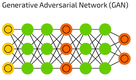 Generative Adversarial Network (GAN)
 Generative Machine-Learning-Systeme (GMLS)
 Gesellschaft
 Google
 Kreativität
 Künstliche Intelligenz (KI / AI)
 Künstliches Leben (Artificial life)
 Lernen
 machine learning
 Mathematik
 Microsoft
 Modelle
 Psychologie
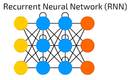 Recurrent Neural Networks (RNN)
 Roboter
 Schach
 Sicherheit
 Sprache


 (
(


 Dieses Buch erwähnt vermutlich nicht ...
Nicht erwähnte Begriffe | Apple, Bildung, Chatbot, Digitalisierung, Generative Pretrained Transformer 3 (GPT-3), Generative Pretrained Transformer 4 (GPT-4), GMLS & Bildung, GMLS & Schule, Informatik-Didaktik, Informatik-Unterricht (Fachinformatik), Intuition (N), Judger (J), Kognitivismus, Langzeitgedächtnis, MBTI (Myers-Briggs Type Indicator), NF-Temperament/Idealists/Blue Helmets, Perceiver (P), Schule, Sensor (S), SJ-Temperament/Guardians/Citizen, SP-Temperament/Artisans/Go West, Thinker (T), unsupervised learning |
 Tagcloud
 Zitationsgraph
Zitationsgraph (Beta-Test mit vis.js)
 Zeitleiste
 1 Erwähnungen
- Abstractions (Peter Denning) (2025)

 Volltext dieses Dokuments
| Artificial General Intelligence: Gesamtes Buch als Volltext (: 252 kByte) |
| Artificial General Intelligence: Gesamtes Buch als Volltext (:  , 5705 kByte) , 5705 kByte) |
| Intelligence (Artificial): Artikel als Volltext |
 Anderswo suchen
 Beat und dieses Buch
Beat hat dieses Buch während seiner Zeit am Institut für Medien und Schule (IMS) ins Biblionetz aufgenommen. Beat besitzt kein physisches, aber ein digitales Exemplar. (das er aber aus Urheberrechtsgründen nicht einfach weitergeben darf). Es gibt bisher nur wenige Objekte im Biblionetz, die dieses Werk zitieren.
 Biblionetz-History