


Post-Truth |

|
 Zusammenfassungen
 How we arrived in a post-truth era, when “alternative facts” replace actual facts, and feelings have more weight than evidence.Are we living in a post-truth world, where “alternative facts” replace actual facts and feelings have more weight than evidence? How did we get here? In this volume in the MIT Press Essential Knowledge series, Lee McIntyre traces the development of the post-truth phenomenon from science denial through the rise of “fake news,” from our psychological blind spots to the public's retreat into “information silos.”What, exactly, is post-truth? Is it wishful thinking, political spin, mass delusion, bold-faced lying? McIntyre analyzes recent examples―claims about inauguration crowd size, crime statistics, and the popular vote―and finds that post-truth is an assertion of ideological supremacy by which ist practitioners try to compel someone to believe something regardless of the evidence. Yet post-truth didn't begin with the 2016 election; the denial of scientific facts about smoking, evolution, vaccines, and climate change offers a road map for more widespread fact denial. Add to this the wired-in cognitive biases that make us feel that our conclusions are based on good reasoning even when they are not, the decline of traditional media and the rise of social media, and the emergence of fake news as a political tool, and we have the ideal conditions for post-truth. McIntyre also argues provocatively that the right wing borrowed from postmodernism―specifically, the idea that there is no such thing as objective truth―in ist attacks on science and facts.McIntyre argues that we can fight post-truth, and that the first step in fighting post-truth is to understand it.
 Kapitel
- 1. What Is Post-Truth? (Seite 1 - 16)

- 2. Science Denial as a Road Map for Understanding Post-Truth (Seite 17 - 34)
- 3. The Roots of Cognitive Bias (Seite 35 - 62)
- 4. The Decline of Traditional Media (Seite 63 - 88)
- 5. The Rise of Social Media and the Problem of Fake News (Seite 89 - 122)
- 6. Did Postmodernism Lead to Post-Truth? (Seite 123 - 150)
- 7. Fighting Post-Truth (Seite 151 - 172)
 Dieses Buch erwähnt ...
 bias
bias Buchdruck
 Bullshit
 Denken
 facebook
 Fake-News
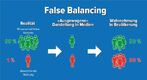 false balancing
 Fehler
 Fernsehen
 Impfung
 Klimawandel
 Lüge
Lüge Philosophie
 Politik
 postfaktisch
 Presse
 Risiko
 social media / Soziale Medien
 Statistik
 Tabakindustrie-Lüge
 Twitter
 Ungewissheit
 Verschwörungsmythos
 Wahrheit
 Wissenschaft


 Dieses Buch erwähnt vermutlich nicht ...
Nicht erwähnte Begriffe | Corona-Impfung, Radio |
 Tagcloud
 Zitationsgraph
Zitationsgraph (Beta-Test mit vis.js)
 Zeitleiste
 1 Erwähnungen
- Mensch, Maschine, Identität - Ethik der Künstlichen Intelligenz (Orlando Budelacci) (2022)

 Volltext dieses Dokuments
| Did Postmodernism Lead to Post-Truth?: Kapitel als Volltext (:  , 401 kByte) , 401 kByte) |
| Fighting Post-Truth: Kapitel als Volltext (: , 306 kByte) |
| Post-Truth: Gesamtes Buch als Volltext (: , 1089 kByte) |
| Science Denial as a Road Map for Understanding Post-Truth: Kapitel als Volltext (: , 253 kByte) |
| The Decline of Traditional Media: Kapitel als Volltext (: , 366 kByte) |
| The Rise of Social Media and the Problem of Fake News: Kapitel als Volltext (: , 490 kByte) |
| The Roots of Cognitive Bias: Kapitel als Volltext (: , 384 kByte) |
| What Is Post-Truth?: Kapitel als Volltext (: , 214 kByte) |
 Bibliographisches
| Titel | Format | Bez. | Aufl. | Jahr | ISBN | ||||||
| Post-Truth | E | - | - | 0 | 0262535041 |  |
 |
 |
 |
 Beat und dieses Buch
Beat hat dieses Buch während seiner Zeit am Institut für Medien und Schule (IMS) ins Biblionetz aufgenommen. Beat besitzt kein physisches, aber ein digitales Exemplar. (das er aber aus Urheberrechtsgründen nicht einfach weitergeben darf). Aufgrund der vielen Verknüpfungen im Biblionetz scheint er sich intensiver damit befasst zu haben. Es gibt bisher nur wenige Objekte im Biblionetz, die dieses Werk zitieren.
 Biblionetz-History